
Before you launch, understand how your customers are already solving the problem you wish to solve and what would make them switch to you.
Most entrepreneurs think their biggest competition is another business selling the same product / service.
It’s not.
Your biggest competition is the customer’s current way of doing things. The habits, routines, or solutions they already rely on to survive without you.
Before you sell anything, you have to ask:
👉 How is my customer already solving this problem?
👉 Why do they prefer that solution?
👉 What would make them switch to mine?
That’s what real market research is about.
Was the Business Doomed to Fail from the Start?
Earlier this week on my Instagram Stories, we talked about two real businesses I watched being set up, both located next to petrol stations in Nairobi. One was a mini-mart in Kileleshwa, and the other, a grocery store in Kilimani.
Both looked promising on paper: good traffic, great visibility, and a “smart” location.
But from the moment I saw the setup begin, I could tell their chances of survival were very slim.
And here’s why 👇
Failure is NOT Optional, But Ignorance Is Costly
I always say failure in business is not optional, it’s part of the journey.
But failure due to ignorance? That’s the most painful kind.
Because imagine putting in your savings, energy, and time…
only to realize later that you didn’t fail because your idea was bad, but because you were set up wrong from the start.
The Real Lesson: Traffic ≠ Target Market
Most people choose a business location by asking, “Is there enough traffic?”
But traffic doesn’t always mean customers.
The real question should be:
👉 How are your customers currently solving the problem you want to solve?
That single piece of research could save you millions and months of frustration.
In both of these cases, the entrepreneurs assumed that “proximity equals demand.”
But in reality, their ideal customers, young professionals and upper-middle-income earners in Kilimani and Kileleshwa , already had easier, faster, and more trusted ways to shop.
They weren’t going to walk a few meters from their cars to save a shilling.
They were going to stop at Quickmart, Carrefour, or simply order from Greenspoon or Glovo.
Business #1: The Mini-Mart
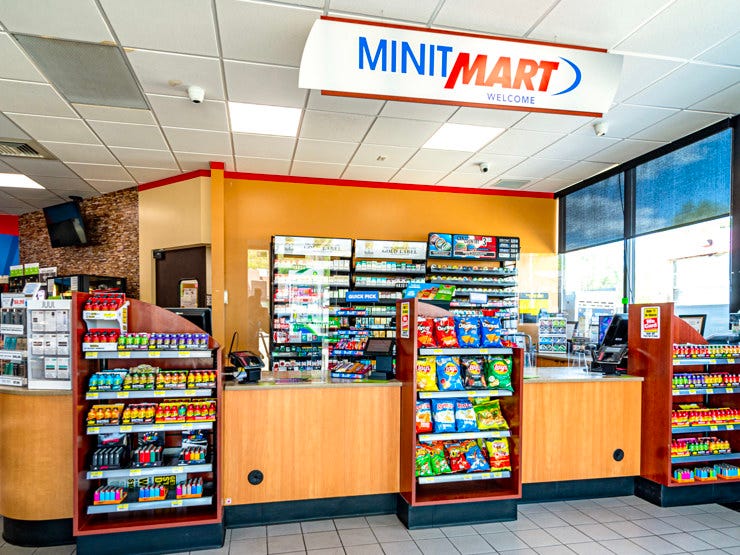
The mini-mart was located right next to a petrol station that already had its own convenience store.
So while the idea was to serve customers fueling their cars, the assumption was flawed because this audience had no incentive to leave the station shop for a smaller one next door.
Even when they later introduced home deliveries, they were now competing with delivery giants offering variety, loyalty points, and faster service.
Lesson: Competition isn’t always who’s next door it’s who’s already solving the same problem better.
Business #2: The Grocery Store

If building a business is hard, building one that deals with perishables is a whole other level of hard.
Running a grocery means racing against time, logistics, and consistency.
And in a market where customers value freshness and reliability,
a single wilted spinach or wobbly carrot can lose you a customer forever.
These customers have high expectations. They are used to clean displays, quick checkouts, and seamless online delivery.
A small store near a petrol station simply didn’t align with their habits or convenience threshold.
Lesson: The market defines what “convenient” means, not the business owner.
The Real Problem
Both of these businesses failed because of one thing:
❌ A lack of research to understand how the customer was already solving the problem.
They didn’t study behavior eg, how often people shopped, what motivated them to buy, what alternatives already existed, or what “convenience” meant to them.
Without that research, both entrepreneurs built based on assumptions, not insights.
Your Takeaway This Week
Before you spend a single shilling on rent, signage, or stock, pause and ask yourself:
🧭 Who exactly am I building this business for?
💡 How are they already solving this problem today?
🚧 And what makes my solution more valuable or convenient than what they’re already using?
If you can’t answer those clearly, your business might already be on shaky ground no matter how “prime” your location feels.
Final Thoughts
It’s easy to get excited about opening a business.
But remember: good intentions don’t make a good business clarity and research do.
Before you build, take the time to truly understand your customer’s world.
Because the goal isn’t just to open shop…….it’s to stay OPEN !
If you’re at a stage where you’re unsure who your real customer is, what they value, or how to position your business for growth, let’s talk.
👉 Book a Clarity Call with me this week, and let’s unpack your idea, your market, and your next best step, together.
[ Book Your 1:1 Clarity Call ]
Until next Friday,
Anne 🩶
Helping entrepreneurs build with clarity and strategy